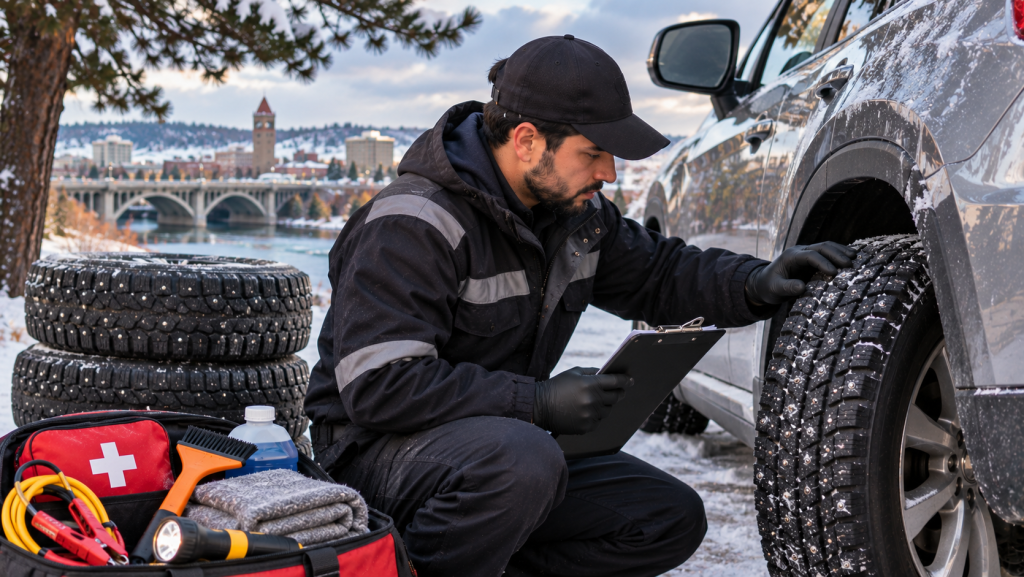
When the first hard freeze arrives in Spokane, the question comes up in a lot of driveways: is it time for studded tires? Studded tires can add grip on packed snow and ice, but they are not the right choice for every driver, and they come with rules, trade offs and a few car checks that are worth doing at the same time. This guide explains the basics of studded tire season in Washington, how studded tires compare with other winter options, what to check on your car before snow arrives, when a tire swap makes sense and how a mobile mechanic in Spokane can help you get ready.
When Studded Tires Are Allowed
According to the Washington State Department of Transportation, studded tires are allowed in Washington from November 1 through March 31, and studless winter tire alternatives are legal year round. Because rules and dates can change, confirm the current requirements with WSDOT or the Washington Department of Licensing before you swap, and check what applies to your vehicle. This article is general information, not a statement of the law.
The practical point is timing. The studded tire season has a start and an end, so plan the swap for the fall and plan the removal for spring, with a little room before the deadline instead of waiting for the last day.
Studded, Studless or All Season?
There are three common choices for Spokane winters, and each has strengths and limits.
- Studded winter tires. Small metal studs bite into packed snow and ice. Many drivers like them for hilly streets and icy mornings. They can be louder on dry pavement and may wear differently than other tires, and they are only allowed in season.
- Studless winter tires. These use special rubber and tread designs made for cold, snow and ice. They have no studs, so they can be used year round, though they are designed for cold weather.
- All season tires. These are made as a compromise for many conditions. Many drivers do fine on them in light winter weather, but they may not match a dedicated winter tire on hard ice and deep snow. Look for the mountain snowflake symbol on the sidewall if you want a tire rated for severe snow service.
The right choice depends on where you drive, how steep your route is, how often you drive in the worst conditions and what your vehicle manufacturer recommends. Your owner’s manual and a tire professional can help you choose. Whatever you pick, matching tires across the vehicle is usually the safest approach, so ask what your vehicle needs.
Things to Know Before You Buy Studded Tires
- Check your vehicle’s recommendations. The owner’s manual lists tire sizes and any limits.
- Replace in sets. Mixing tire types can change how the car handles. Ask a tire professional how to install them for your vehicle, including whether all four wheels should match.
- Allow break in time. New studded tires often come with instructions for the first miles of driving, so follow the manufacturer’s guidance.
- Expect different road noise. Studs can be louder on bare pavement.
- Plan the removal. Mark the end of the season on your calendar.
- Studs do not fix everything. Even good winter tires cannot make a car stop or turn like it does on a dry road, so slow down and leave extra space.
The Winter Tire Swap
If you keep one set of tires for summer and another for winter, the swap is a good moment for a closer look at the wheels and the brakes.
- Inspect the tires coming off. Look for cuts, bulges, cracks and uneven wear, which can hint at alignment or suspension problems.
- Check the new set. Make sure the sizes are right, the studs are in good shape if the tires are studded and the sidewalls are undamaged.
- Look at the brakes while the wheels are off. Pads, rotors and hardware are easy to see at that point.
- Torque the lug nuts correctly. The right tightness and pattern matter, and many shops recheck them after some driving.
- Set the pressure. Use the pressure on the door jamb sticker or in your owner’s manual.
- Store the other set properly. Keep them in a cool, dry place away from direct sun.
Some of this work, such as mounting and balancing tires on rims, needs a tire machine and may be best handled at a shop. A technician can tell you what can be done at your home and what cannot.
Car Checks Before Snow Arrives
Tires are only part of winter readiness. Our guide on how to prep your car for snow covers the basics, and the checks below are the ones that matter most here.
Battery
Cold weather makes engines harder to start and reduces what a battery can deliver. Slow cranking, dim lights and an older battery are warning signs. A technician can test the battery and charging system quickly.
Brakes
Hills and slippery roads put extra demand on your brakes. Watch for squealing, grinding, a soft pedal, pulling to one side and a brake warning light. Brakes are a safety system, so repairs belong with a qualified technician. If the pedal ever feels wrong while driving, slow down safely, pull over when you can and do not keep driving as usual.
Wipers, washer fluid and lights
- Replace wiper blades that streak or skip.
- Use washer fluid made for cold weather.
- Test headlights, brake lights, turn signals and hazard lights.
- Check that the defroster and heater work.
Coolant and fluids
Coolant protects the engine from freezing and overheating. Check the level and condition, and follow your owner’s manual for the correct type. Review the oil, brake fluid and power steering fluid as well, and look for leaks under the car.
Alignment and suspension
Potholes and rough winter roads can knock a car out of alignment. If your car pulls to one side, the steering wheel is off center or tires wear unevenly, have it checked. Our article on winterizing your car in Spokane for snow, ice and steep roads goes deeper on how local conditions affect your vehicle.
Driving Habits That Help
- Slow down and leave extra following distance.
- Brake early and gently, and avoid sudden steering.
- Take hills steadily. Build speed before an incline instead of accelerating hard partway up, and keep a safe gap on the way down.
- Clear snow and ice from all windows, lights and the roof before driving.
- Keep the fuel tank at least half full.
- Carry an emergency kit, with blankets, a flashlight, a charger, gloves, an ice scraper, a small shovel and jumper cables.
Stop Driving If You Notice
- A brake warning light, a soft pedal or brakes that stop responding normally.
- Steam, a temperature warning or a burning smell.
- An oil pressure warning light.
- Steering that suddenly feels loose or heavy.
- A severe vibration or a tire that looks damaged or low.
Pull over in a safe place as soon as you can and get help instead of pushing on. Your owner’s manual explains what the warning lights mean for your vehicle.
How a Mobile Mechanic Can Help
A mobile mechanic can come to your home or workplace in Spokane and go through the checks that matter before snow arrives: a battery test, a look at the brakes, tires, wipers, lights and fluids, and help with small repairs. That is also a good time to ask about your winter tire plan. Some jobs, such as mounting and balancing tires, alignments and larger brake or suspension repairs, may need a shop with specialized equipment, and a good technician will tell you honestly which jobs those are.
Quick Summary
- Studded tires are allowed in Washington from November 1 through March 31, and studless winter tires are legal year round. Confirm the current rules with WSDOT.
- Studded, studless and all season tires each suit different drivers.
- Use the tire swap as a chance to inspect tires and brakes.
- Test the battery, check the brakes and fluids and replace worn wipers before snow arrives.
- Plan the spring removal before the deadline.
- Some tire work needs a shop, and some checks can be done at home.
A little preparation makes winter driving in Spokane easier. If you would like help getting ready, visit the Mobile Mechanic Pros of Spokane homepage to learn more, or contact us to schedule a visit before the snow falls.