
In Spokane, snow is not a question of if but when. Once the first real storm arrives, roads turn slick, hills get tricky, and every small weakness in a car becomes easier to notice. The best time to get ready is before the flakes fall, while the weather is still calm and a parts store or technician is easy to reach. This step by step guide walks you through how to get your car snow ready, from the battery and tires to the wipers, fluids, and emergency kit. Follow it in order, and you will cover the items that matter most for snow car prep in Spokane and for winter car maintenance in general.
Step 1: Start With a Plan and Your Owner’s Manual
Before you check anything, open your owner’s manual. It lists the recommended fluids, tire pressures, service intervals, and any winter driving guidance specific to your vehicle, including how traction control and anti lock brakes behave. It also shows how to check fluids safely and where the jump start points are. Make a short list of what you find, so you can work through it one step at a time. If your car is due for service, add that to the list now.
Step 2: Test the Battery
Cold weather is hard on batteries. It thickens the engine oil, which makes the engine harder to turn, while it reduces the power the battery can deliver. A battery that seemed fine in warm weather can quit on the first freezing morning. Warning signs include slow cranking, dim lights, a battery or charging warning light, corrosion on the terminals, and an age of several years. Have the battery and charging system tested before the cold sets in, and replace a weak battery on your own schedule instead of waiting for it to fail. If your car does not start one morning, our guide to the top 10 reasons your car won’t start and how to get back on the road explains the usual causes.
Step 3: Inspect Your Tires
Your tires are the only thing connecting you to a snowy road, so give them the most attention.
- Check the tread depth, because worn tires lose grip quickly on snow and ice
- Check the pressure on all four tires and the spare, when the tires are cold
- Look for cracks, bulges, cuts, and uneven wear
- Consider the age of the tires, since rubber hardens over time even if the tread looks fine
- Think about whether your tires suit the conditions you drive in
Use the pressure listed on the label inside the driver’s door jamb or in your owner’s manual, not the number printed on the tire. Pressure drops as temperatures fall, so check it more often in winter. If you use winter tires or plan to carry chains, make sure they fit your vehicle and practice installing them in good weather. A tire professional can help you choose what suits your car and your driving.
Step 4: Check the Brakes
Stopping on snow and ice takes much longer, and Spokane’s hills put extra demand on brakes. Listen for squealing or grinding, and notice a soft pedal, pulling to one side, or vibration when you stop. Brakes are a safety system, so have anything unusual inspected before the snow arrives. Our article on snow, ice, and steep roads and winterizing your car in Spokane covers how local conditions affect your vehicle in more detail.
Step 5: Replace Worn Wipers and Fill the Washer Fluid
Snow, slush, and road spray cover the windshield quickly, and worn wipers just smear it around. Replace blades that streak, skip, chatter, or leave unwiped patches. Blades made for winter resist ice buildup, and your parts guide or owner’s manual lists the right size. Fill the washer reservoir with a fluid made for cold weather, since plain water can freeze. Check that the nozzles spray where they should, and lift your wipers off the glass if the car will sit outside during a freezing storm, if your owner’s manual allows it.
Step 6: Check All Your Lights
Winter days are short, and storms cut visibility even more. Test the headlights, high beams, brake lights, turn signals, and hazard lights. Clean the lenses, and replace any bulbs that are dim or burned out. Cloudy or yellowed headlight lenses reduce how far you can see, so they are worth attention. Always clear snow off the lights before you drive, and turn on your headlights in snowfall so others can see you.
Step 7: Check Coolant and Other Fluids
Coolant, often called antifreeze, protects the engine from both overheating and freezing. A weak or old mixture may not protect against low temperatures, so have it tested if you are unsure. While the engine is cool, check the coolant level, and also the engine oil, brake fluid, and power steering fluid, using the methods in your owner’s manual. Use the oil viscosity your manufacturer specifies, since cold affects how oil flows. If most of your driving is short trips or stop and go traffic, ask about the severe service schedule in your manual.
Step 8: Look at Belts and Hoses
Rubber stiffens in the cold, and a belt or hose that is already worn can fail on a freezing morning. Look for cracks, fraying, glazing, bulges, or soft spots. A squeal at startup is a common sign of a loose or worn belt. A failed belt can take out the charging system and cooling in a hurry, which is not a situation you want in a snowstorm.
Step 9: Test the Heater and Defroster
A heater and defroster that work well are a safety feature in winter, not just a comfort. Run the heater and make sure it warms up and that air flows from the vents. Test the front and rear defrosters, and check that the windows clear. A heater that blows cool air may point to low coolant or a circulation problem, and weak airflow may mean a clogged cabin air filter. Keep the inside of the glass clean, which helps with fogging.
Step 10: Look Underneath and Protect the Finish
Road treatments used on winter roads can speed up rust on the underbody, brake lines, and exhaust parts. Wash the car when conditions allow, including the underside, to remove residue. Look under the car for drips or leaks, and touch up chips and scratches before moisture gets under the paint. A technician can inspect the underside for early signs of corrosion and worn suspension parts.
Step 11: Build a Winter Emergency Kit
Even a well prepared car can get stuck, and help may take time to arrive in bad weather. Keep these items in the vehicle:
- A warm blanket, extra coats, gloves, and a hat
- A flashlight with fresh batteries
- Jumper cables or a portable jump starter
- A phone charger and a charged phone
- Water and snacks that will not spoil
- An ice scraper and a snow brush
- A small shovel and a bag of sand or kitty litter for traction
- Reflective triangles or flares
- A tire pressure gauge, a basic tool kit, and the spare tire tools
- Tire chains or traction devices that fit your vehicle, if you plan to use them
- A basic first aid kit
Step 12: Keep the Fuel Tank Fairly Full
In winter, it is wise to keep the tank well above empty. A fuller tank gives you more fuel if you get stuck in traffic or delayed by a closure, and it helps you run the heater if you have to wait. Plan ahead before long trips, and check the forecast and road conditions before you leave.
Step 13: Practice Safe Snow Driving
A prepared car still needs a careful driver. Slow down, and leave much more space between you and the vehicle ahead, since stopping on snow and ice takes far longer. Brake, steer, and accelerate gently to avoid skids. On hills, build a little momentum before you start up and avoid stopping mid climb, and on the way down use a lower gear if your owner’s manual allows it, so the engine helps control speed. Watch for black ice on bridges, shaded corners, and overpasses. If conditions become unsafe, the best choice may be to wait until they improve. If you do get stuck, stay with your vehicle when it is safe, call for help, and keep the exhaust pipe clear of snow if you run the engine, so fumes do not build up.
Your Quick Snow Prep Checklist
- Battery and charging system tested
- Tires with good tread, correct pressure, and no damage
- Brakes quiet and responsive
- Wipers replaced if needed, with cold weather washer fluid
- Lights working and lenses clear
- Coolant and other fluids checked
- Belts and hoses free of cracks
- Heater and defroster working
- Underbody checked and washed
- Emergency kit stocked and fuel tank well filled
Can a Mobile Mechanic Help You Get Snow Ready?
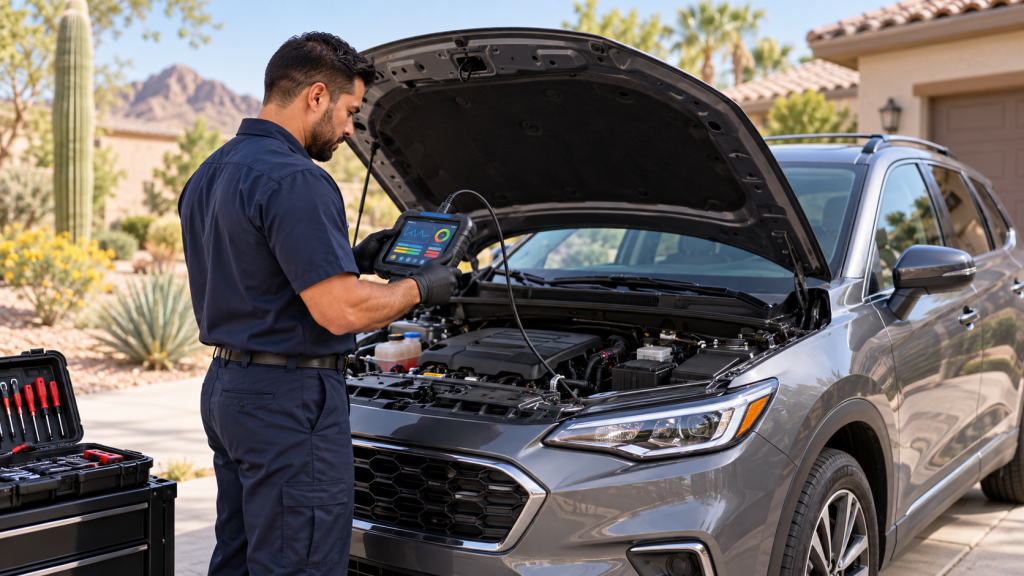
In many cases, yes. A mobile mechanic can come to your home or workplace in the Spokane area, test the battery and charging system, inspect the tires, brakes, belts, hoses, lights, and fluids, replace wiper blades, and handle many common repairs on site. That saves you a cold trip to a shop and lets you get ready before the storm hits. Some jobs, such as tire mounting that needs a machine, major brake work, or repairs that need a lift or specialized equipment, may need a full shop, and a trustworthy technician will tell you honestly when that is the case. When you book, share your vehicle’s year, make, model, and mileage, and mention anything you have noticed, such as slow starts, noises, or warning lights.
Get Ahead of the First Storm
Snow prep takes a little time, and it pays off on every icy morning and snowy commute. Work through the steps above, and you will drive with more confidence and fewer surprises. If you have not looked at your car lately, now is a good time to have it checked.
To learn more about our services, visit our homepage. If you would like your car ready for snow, reach out through our contact us page and we will come to you anywhere in the Spokane area.